
The Quiet Strength of Resilient Leadership
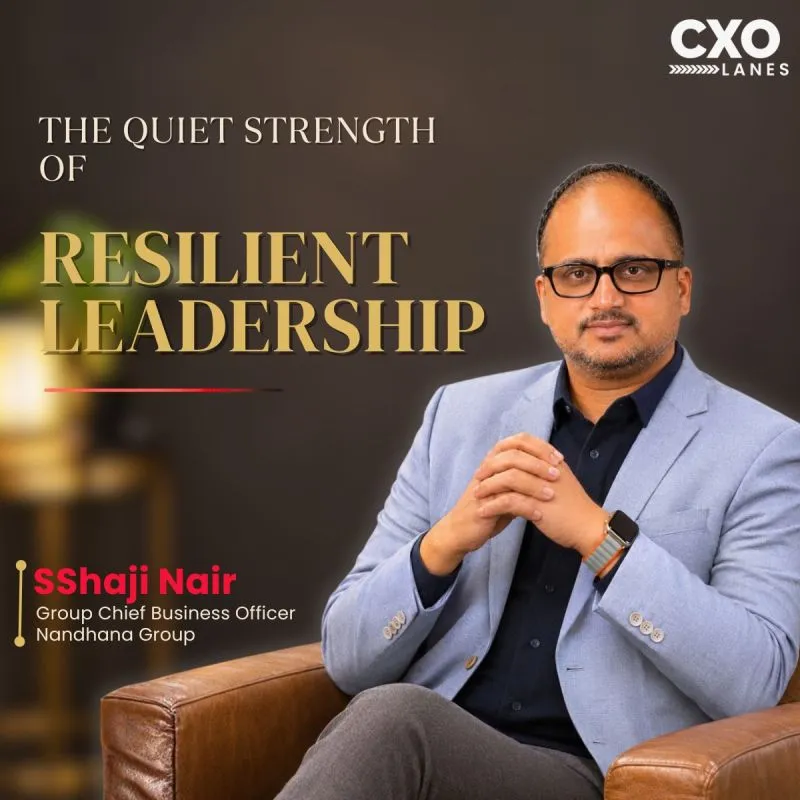
The Quiet Strength of Resilient Leadership By SShaji Nair, Group Chief Business Officer, Nandhana Group Over nearly three decades in business, I have learnt that leadership is truly tested when targets fall short, circumstances change and decisions become difficult. These moments reveal a leader's strength. Resilience is more than bouncing back from adversity. It is the ability to remain composed under pressure, learn from setbacks and move forward with conviction. As an admirer of Mahendra Singh Dhoni, I have always been inspired by his composure, judgement and ability to back his team. His leadership reinforces an important lesson: composure is not the absence of pressure, but the ability to think clearly despite it. Composure Is a Leadership Skill In business, markets shift, plans change and outcomes do not always meet expectations. A leader's response can either unsettle a team or give it the confidence to act decisively. Like focusing on the next ball rather than the entire match, leaders must avoid letting immediate pressure compromise their judgement. Composure means acknowledging challenges, separating emotion from analysis and making informed decisions. Know When to Hold Your Nerve and When to Adapt Resilience means knowing when to stay the course and when to adapt, without losing sight of the larger goal. Leaders must stay firm on the destination while remaining flexible about the route. The objective is not to prove an earlier decision right, but to make the right decision for the situation at hand. Take Responsibility and Learn from Setbacks Leadership matters most when outcomes are unfavourable. It takes courage to own a decision that fails, acknowledge missed targets and take responsibility for recovery. Blame rarely solves problems. Accountability means owning mistakes, learning from them and turning lessons into action. Resilient leaders understand that setbacks do not define individuals; they provide an opportunity to grow. Build the Team and Trust Its Potential Resilience may begin with an individual, but its greatest impact is felt through the team. Sustainable performance comes from developing capable people, giving them ownership and creating an environment where they feel trusted to deliver. The true measure of leadership is how effectively a team performs and evolves, even in the leader's absence. Moving Forward, Wiser and Stronger Resilience lies in staying composed, taking ownership, adapting and learning from mistakes. Like cricket, leadership is not about winning every ball, but about reading the situation, trusting your judgement and responding with conviction. Dhoni's leadership reminds me that calm judgement and trust in a team can matter just as much as individual brilliance. Ultimately, resilience is not simply about bouncing back. It is about moving forward with greater wisdom, renewed conviction and the courage to keep going, even when the path ahead is uncertain.
Share this article
Send it to a colleague or post it to your network.