
Data Intelligence: Three Rebuilds for Life Sciences
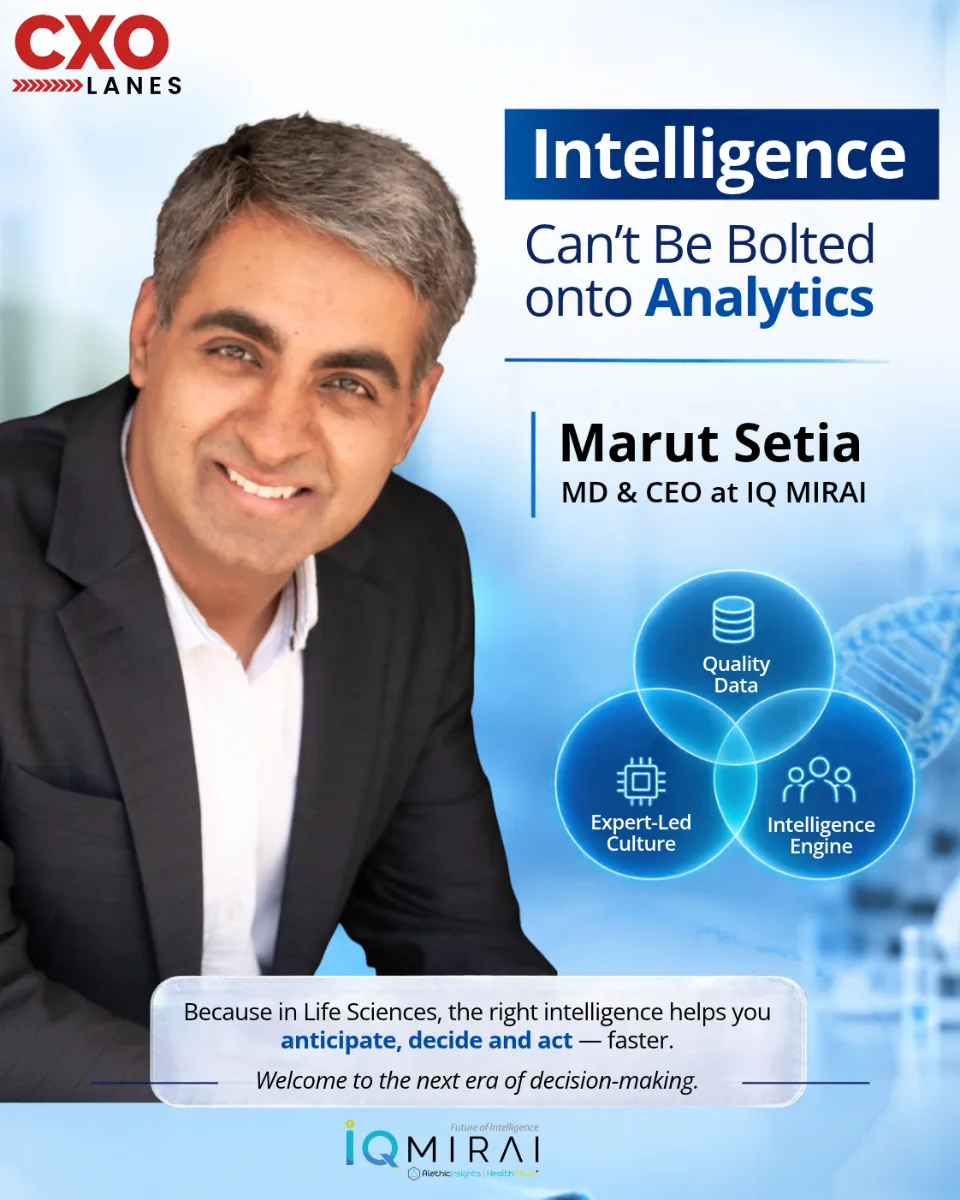
Intelligence Can't Be Bolted onto Analytics
Architecture, culture, stack: the three rebuilds every company now faces
For years, organizations have operated under a simple assumption: collect good data, build strong analytics, deploy visualization tools, and better decisions will follow.
Reality has proven otherwise.
A modern aircraft cockpit is filled with data from hundreds of sensors, yet data alone does not fly an airplane. Safety depends on the pilot's ability to interpret multiple signals, understand context, anticipate risks, and make intelligent decisions in real time.
Leading a Life Sciences organization is no different.
Across Life Sciences, significant investments have been made in data platforms, analytics ecosystems, and reporting tools. While these capabilities remain essential, they are no longer sufficient.
Data has become abundant. Analytics has become accessible. The challenge today is not gathering signals but connecting them.
Yet many leaders still find themselves making critical calls on instinct, with dashboards open in another tab.
Consider how leading pharmaceutical companies navigated supply chain disruptions during the pandemic. Success did not come from dashboards alone. It came from correlating epidemiological trends, manufacturing capacity, logistics constraints, market demand, and regulatory realities into coordinated action.
Similarly, successful commercial strategies are rarely driven by a single data source. They emerge from the intelligent synthesis of market access dynamics, physician behavior, patient outcomes, competitive activity, and field insights.
Building this capability requires three ingredients.
1. High-quality internal and external data.
2. An intelligence engine that can triangulate signals and transform insights into actionable decisions.
3. And most importantly, deep domain expertise and a culture that trusts intelligence as a decision-support partner rather than viewing it as an auditing mechanism.
Many organizations are now trying to close this gap by layering AI on top of existing dashboards: a chatbot that queries the BI tool, a predictive model that feeds a new report. These add-ons inherit every limitation of what sits beneath them. They see only the data the dashboard wasbuilt to show. They answer questions leaders already know to ask. And they deliver insight after the decision window has closed. Intelligence that is bolted on can describe the past faster. Intelligence that is designed in changes what happens next. At IQ Mirai, we call this intelligence layer NUDGE. NUDGE is not a dashboard. It is a decision-support engine designed to connect disparate signals, surface hidden patterns, and he point leaders to the decisions that matter most. More importantly, it actively nudges decision-makers toward better outcomes by bringing together the right data, contextual intelligence, market signals, and domain expertise at the exact moment decisions matter.
A nudge is rarely about telling you what to do. It is about helping you see what you might otherwise miss. It nudges you to look beyond isolated metrics, beyond conventional wisdom, and beyond the obvious answer.
Whether identifying an emerging market opportunity, anticipating a supply chain risk, or prioritizing the next commercial action, NUDGE acts as a trusted advisor available 24x7, helping leaders make sense of complexity and move from information to action.
The future belongs not to organizations with the most data, but to those that can transform data into intelligence and intelligence into decisions. The question for every Life Sciences leader is no longer “Do we have the data?” It is “When the next critical decision arrives, will we see what matters in time?”
At IQ Mirai, helping leaders answer “yes” is what we do. Welcome to the next era of decision-making. Welcome to IQMirai.
Share this article
Send it to a colleague or post it to your network.