
From Data Chaos to Decision Intelligence: How Enterprises Are Rebuilding Their Analytics Stack
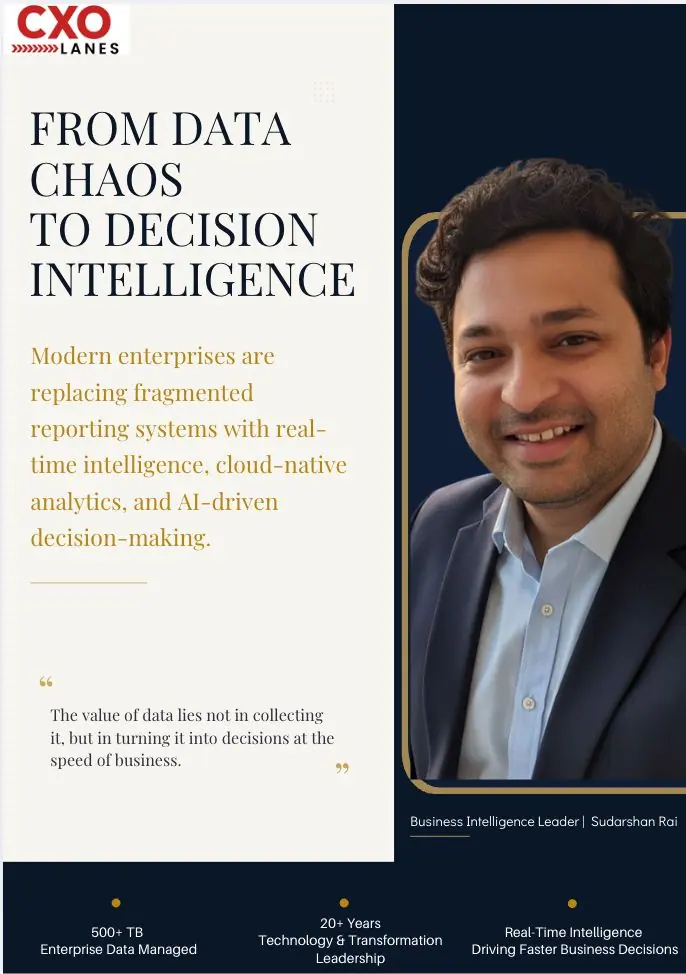
For years, organizations invested heavily in dashboards and reporting tools, believing more data would naturally lead to better decisions. Yet many enterprises still struggle with fragmented systems, inconsistent metrics, and delayed insights. The challenge today is no longer collecting data—it's turning it into actionable intelligence.
According to Sudarshan Rai, enterprises are moving beyond traditional reporting toward real-time decision intelligence. Drawing on his experience across Veracitiz, Luppiter Tech,. he has seen how legacy analytics environments often create silos rather than clarity. Static dashboards can explain what happened, but modern businesses need systems that help determine what should happen next.
A major obstacle remains data quality. As organizations operate across multiple platforms, cloud environments, and business applications, maintaining consistency, governance, and trust in data becomes increasingly difficult. Without strong data foundations, even the most advanced analytics initiatives struggle to deliver meaningful outcomes.
Sudarshan believes cloud-native ETL, automation, and intelligent data governance are reshaping how enterprises manage information. Modern platforms are enabling organizations to create connected ecosystems where data moves seamlessly, insights are generated faster, and decision-making becomes more proactive than reactive.
Looking ahead, he sees autonomous analytics as the next evolution. Rather than simply producing reports, future analytics platforms will continuously identify patterns, surface risks, and recommend actions in real time. The organizations that lead in the AI era will not be those with the most data, but those that can transform data chaos into trusted decision intelligence.
Share this article
Send it to a colleague or post it to your network.