
From Geopolitical Volatility to Strategic Advantage: India's Clean Energy Diplomacy
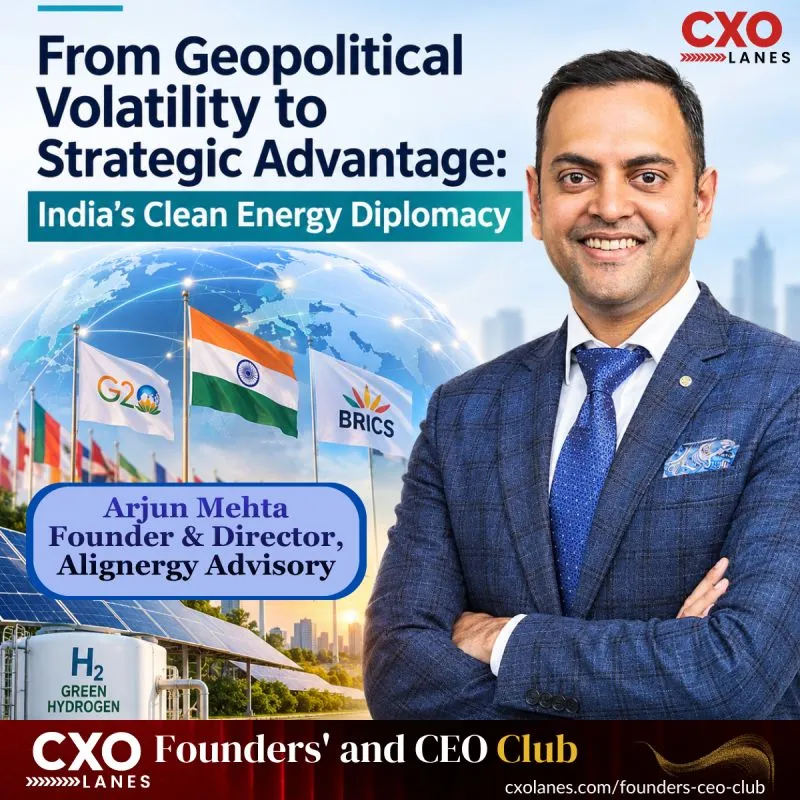
From Geopolitical Volatility to Strategic Advantage: India's Clean Energy Diplomacy India's diplomacy has become a capability in its own right. During COVID-19, Vaccine Maitri sent over 160 million doses to nearly 100 countries, neighbours first. India's 2023 G20 Presidency won consensus and a permanent seat for the African Union. As BRICS chair this September, India secured a consensus declaration from an eleven-nation bloc deadlocked in May. Engaging traditional geopolitical power centres without ideological entanglement lets India profit from crises rather than absorb them. Diplomacy is no longer an accessory. It is a strategic lever. In the energy sector, this is even more relevant. This year's turmoil around the Strait of Hormuz disrupted supplies from the Middle East – the source of much of India's imports of oil, natural gas, ammonia, and fertiliser – and pushed up energy prices globally. Domestic clean fuels are the hedge, and a new export earner for India. Government green ammonia tenders cleared at around $550 a tonne, arguably within 10-25% of fossil-based ammonia, a gap narrowing further as gas prices climb. Indian developers have signed deals for over 500,000 tonnes of green hydrogen a year (mostly as ammonia or methanol), over a tenth of the 2030 target, with over 70% bound for export and some ₹90,000 crore of investment needed. Long-term ammonia and methanol contracts link Indian projects to Europe, the Far East and South East. A leading global tracker ranks India third worldwide for contracted clean hydrogen. Cleantech manufacturing is catching up with ambition. Solar module factories can make over 260 GW a year, with growing capacity for solar cells, the core of each panel. Wind turbine factories can make about 24 GW a year, roughly three-quarters local, and exports rose by about half in 2025-26. Electrolysers, the machines that make green hydrogen, have about 3 GW a year of incentivised factory capacity. Battery pack assembly exceeds 80 GWh a year, but cell manufacturing, the high-value core, is far smaller. India’s diplomacy has matured into a strategic capability, and India can practice clean energy statecraft that turns global turbulence into real leverage. This year’s Middle East disruptions exposed the cost of import dependence; Indian green ammonia export deals are building a commercially and politically viable alternative for import-dependent economies. Cleantech manufacturing is scaling too, deepening local supply chains. At BRICS, Prime Minister Narendra Modi warned against weaponising technology. Diplomacy has opened the doors. Only cost, quality and delivery will keep them open. By Arjun Mehta Founder & Director, Alignergy Advisory hashtag # CleanEnergyTransition hashtag # EnergyDiplomacy hashtag # GreenHydrogen hashtag # cxolanes
Share this article
Send it to a colleague or post it to your network.