
Leadership's Role in Bridging Company-Employee Gaps
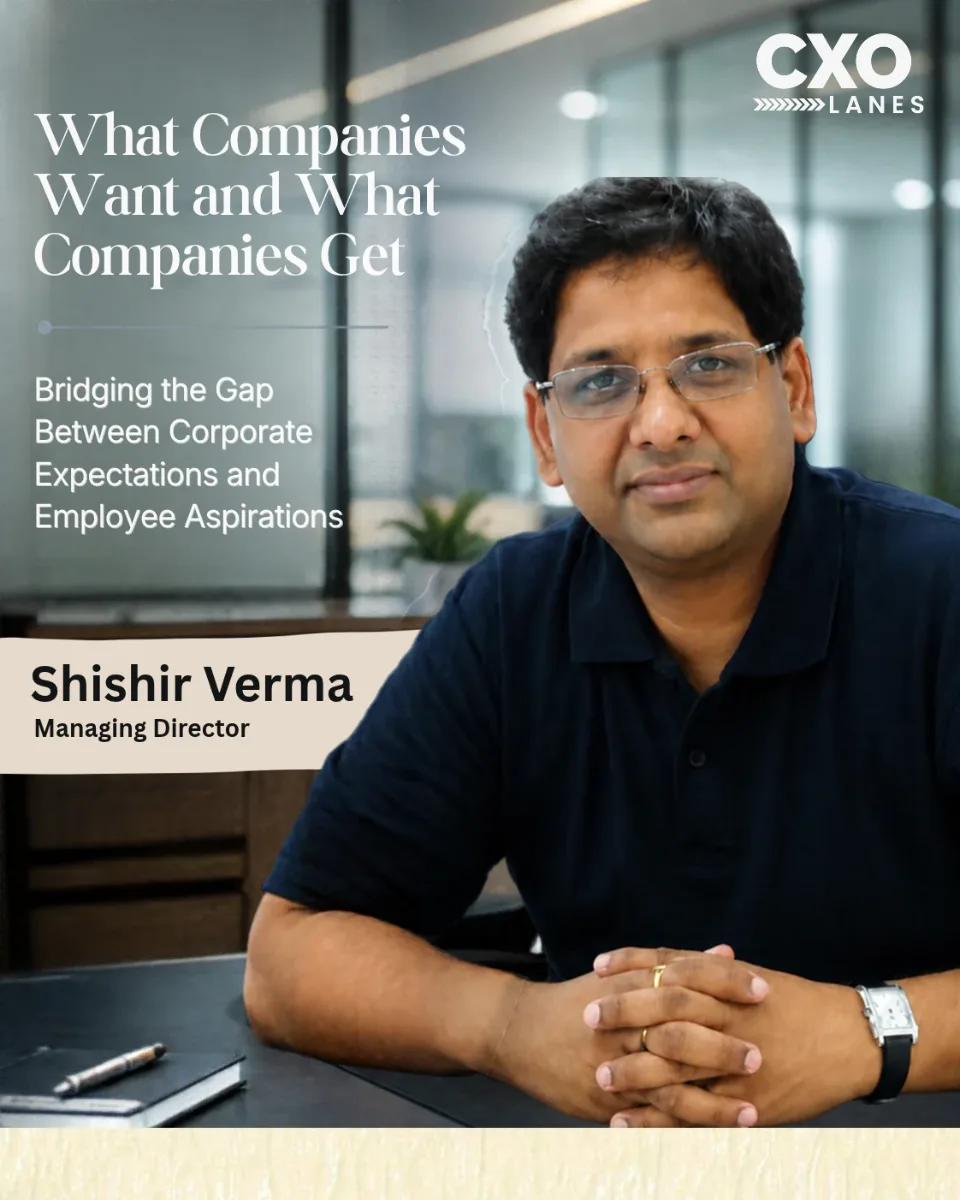
What Companies Want and What Companies Get
Bridging the Gap Between Corporate Expectations and Employee Aspirations
In today’s volatile business environment, companies and employees are caught in a continuous cycle of expectations, dissatisfaction and change. Companies seek growth, productivity and profitability, while employees aspire for better compensation, recognition and career advancement. Both increasingly look for better opportunities, believing that a change will bring the desired growth.
Although AI dominates corporate conversations, its execution and implementation are yet to translate into measurable improvements in productivity, profitability and business growth across many traditional organisations.
Understanding the Challenges
- Slowing Corporate Growth: Companies struggle to expand as competition in India advances faster than existing business concepts and strategies.
- Uneven Business Performance: While a few organisations have grown exponentially, many face slow growth, negativity, declining confidence and a sense of defeatism.
- Employee Dissatisfaction: Following the 20:80 Pareto principle, a few employees experience significant growth, while the majority feel neglected. Single-digit increments, limited recognition and workplace frustrations affect financial security, motivation and self-esteem.
- The Search for Change: Both companies and employees look for alternatives, expecting the next opportunity to deliver better growth, productivity and profitability.
- The Cycle of Reaction: Newton’s First Law highlights the need for an external force to initiate change, while the Third Law reflects the reactions that often make company-employee relationships bitter. Both wait for favourable market conditions, but the underlying challenges remain.
The Way Forward: Leadership Must Lead
Corporate deliberations reveal four realities:
- Employees remain silent, prioritising monthly salaries to manage EMIs and family responsibilities while exploring other opportunities.
- Companies retain existing employees because hiring has become cumbersome, despite compromised productivity and profitability.
- Top leadership drives structural changes and initiatives for growth, productivity and profitability. These decisions eventually influence the entire organisation, bringing both positive and negative outcomes.
- The First Lesson: Change Must Begin at the Top. Leadership must take responsibility for transforming organisational culture, decision-making and execution.
Sustainable growth cannot come from replacing employees or changing organisations alone. It requires leadership that aligns business objectives with employee aspirations and converts discussions around AI, productivity and growth into measurable action.
The real question is not who should change first, the company or the employee, but whether leadership is ready to make that change happen.
Share this article
Send it to a colleague or post it to your network.