
The CMO Is Becoming the Integrator of Growth
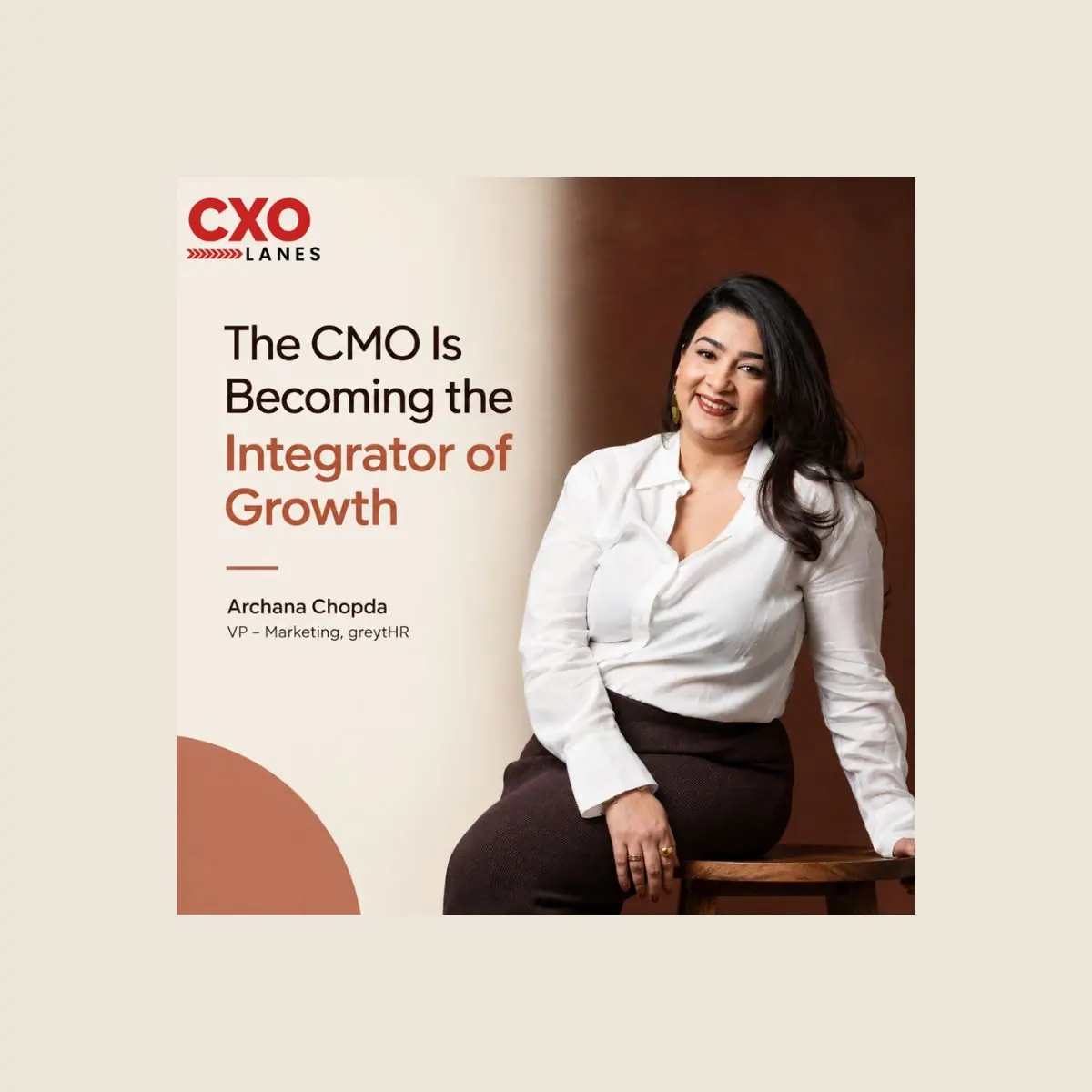
By Archana Chopda, VP – Marketing, greytHR
Twenty years in, nothing has ever left the CMO's job. It has only been added to. The real work now is making all of it move together.
Every few years, Marketing announces a new kind of CMO: digital, then data-driven, then revenue-accountable, and now AI-first.
Over two decades in Marketing, driving initiatives at brands like Microsoft, HP, GE, and Salesforce, I have watched each of these arrive as an addition, not a replacement. Brand, creativity, and customer instinct never left the job. Each new expectation came with its own team, tools, and scoreboard.
A function built in layers tends to pull apart at the seams. Holding those layers together has become the CMO's defining job. In practice, that means connecting four things that used to run separately: Brand with Performance, Marketing with Sales, Marketing with Finance, and the specialist teams within Marketing itself. AI is about to test all four at once.
𝐁𝐫𝐚𝐧𝐝 𝐚𝐧𝐝 𝐏𝐞𝐫𝐟𝐨𝐫𝐦𝐚𝐧𝐜𝐞: 𝐎𝐧𝐞 𝐏𝐥𝐚𝐧, 𝐓𝐰𝐨 𝐂𝐥𝐨𝐜𝐤𝐬
The brand-versus-performance debate usually shows up as a budget argument, and performance tends to win it. Its returns land inside the quarter, where everyone can see them. Brand pays out over years, in pricing power, shorter sales cycles, and a place on the buyer's list before any search begins.
A budget that follows attribution will slowly trade the next three years for this quarter. The CMO's job is to run both clocks inside one plan: protect a defined share of spend from quarterly attribution, say plainly what it is meant to build, and hold that line when the quarter gets tight.
What matters most is that both work toward the same growth ambition.
𝐌𝐚𝐫𝐤𝐞𝐭𝐢𝐧𝐠 𝐚𝐧𝐝 𝐒𝐚𝐥𝐞𝐬: 𝐓𝐡𝐞 𝐇𝐚𝐧𝐝𝐨𝐟𝐟 𝐇𝐚𝐬 𝐌𝐨𝐯𝐞𝐝
Brand gets a company onto the shortlist. From there, the buyer does most of the evaluating alone: through reviews, peers, analysts, and increasingly an AI assistant. By the time they walk into the first sales call, a presumption has already taken root.
That moves Marketing's job from generating demand to building confidence across the whole purchase cycle.
In a B2B deal, the finance leader, the IT leader, and the functional head each raise a different objection, and underneath each objection sits a fear that can stall the deal.
Marketing should preemptively alleviate those fears while the deal is live, which is why I believe Product Marketing belongs closer to live deals, customer objections, and win-loss conversations. It is also why Marketing should care about progression and win rate, not only demand creation.
𝐓𝐡𝐞 𝐂𝐌𝐎 𝐍𝐞𝐞𝐝𝐬 𝐚 𝐂𝐅𝐎 𝐂𝐨𝐧𝐯𝐞𝐫𝐬𝐚𝐭𝐢𝐨𝐧
Revenue-based marketing requires the CFO's buy-in. A CMO who speaks the language of finance and can show win rates earns a deserved seat at the leadership table. What keeps the CMO valuable there is the part only Marketing can see: why customers behaved the way they did, which beliefs shifted, which objections persist, and where the next demand will come from. Finance sees the result in the numbers; the CMO understands the customer behaviour behind it, and that understanding tells the business where the next rupee of growth should go.
It helps to present Marketing the way Finance already thinks: as a portfolio of bets with different payback periods. Knowing why customers buy is what lets the CMO defend that portfolio, separating the bets that pay back this quarter from the ones building demand for the next three years.
𝐎𝐧𝐞 𝐒𝐜𝐨𝐫𝐞𝐛𝐨𝐚𝐫𝐝 𝐟𝐨𝐫 𝐭𝐡𝐞 𝐖𝐡𝐨𝐥𝐞 𝐌𝐚𝐫𝐤𝐞𝐭𝐢𝐧𝐠 𝐓𝐞𝐚𝐦
A CMO can make that case to the CFO only when the marketing team is pulling in one direction. Most marketing teams split into specialisms, and each tracks its own numbers: Brand watches reach, Content watches traffic, Performance watches leads, Product Marketing watches launches. All of those numbers can rise while quarter-on-quarter revenue falls.
Most CMOs have sat through that review, where every team's dashboard is green and the business number is red.
The answer is to keep the specialists and change what they are measured on. Give every marketing team the same two or three business goals, such as pipeline created and deals won, and treat each team's own metrics as early signals of those goals. When everyone is judged on the same result, the teams start planning together.
𝐀𝐈 𝐚𝐧𝐝 𝐉𝐮𝐝𝐠𝐦𝐞𝐧𝐭: 𝐀𝐈 𝐑𝐚𝐢𝐬𝐞𝐬 𝐭𝐡𝐞 𝐕𝐚𝐥𝐮𝐞 𝐨𝐟 𝐭𝐡𝐞 𝐈𝐧𝐭𝐞𝐠𝐫𝐚𝐭𝐨𝐫
Each of these four shifts pulls the CMO toward the same skill: integration. With production made accessible to every company at the same moment, speed stops being an advantage almost as soon as it arrives.
The advantage then moves upstream: deciding what deserves to be made in the first place. Marketing already holds the evidence for those decisions in sales calls, lost-deal notes, reviews, and customer interviews. Pointed there, AI shortens the learning cycle, surfacing, for example, the objections that keep returning or the stakeholder who keeps slowing deals. AI can surface the pattern. Deciding what it means is still, and probably will always be, the CMO's call.
AI is also changing where buyers form their shortlist. Many now ask an AI assistant which vendors to consider well before they visit a website, and the answer draws on the work of PR, Product Marketing, SEO/GEO/AEO and Brand at once. The assistant reads all of it as one company, and so does the buyer. Earning a place in that answer depends on those teams building the same authority together, which brings the CMO back to the role of integrator.
𝐈𝐧𝐭𝐞𝐠𝐫𝐚𝐭𝐢𝐨𝐧 𝐈𝐬 𝐭𝐡𝐞 𝐉𝐨𝐛
As the CMO remit widens, the tempting response is to own more of it.
The stronger position is fluency: enough understanding of Sales, Product, Customer Success, Data and Technology to connect them, and enough credibility with their leaders to agree on shared plans and shared numbers.
Growth now depends on how well a company's teams work together, and someone has to own that connection. The CMO sits closest to the customer, the market, and the revenue line at once, which makes the role the natural place for it. That is the job ahead: the CMO as the integrator of growth.
𝐀𝐛𝐨𝐮𝐭 𝐭𝐡𝐞 𝐀𝐮𝐭𝐡𝐨𝐫: Archana Chopda is a B2B SaaS and enterprise marketing leader with more than two decades of experience across global technology and enterprise businesses, including Microsoft, Salesforce, GE Healthcare and HP, spanning North America, India, the Middle East, Africa and Asia. Her focus has spanned revenue marketing, go-to-market strategy, brand and, more recently, GEO and AEO strategy as buyer discovery moves into AI-driven search. She currently leads Marketing at greytHR across India, the Middle East, and Southeast Asia.
Share this article
Send it to a colleague or post it to your network.